Support is a network.
Federal, state and local organizations work alongside families, friends and neighbors.
 Get email updates
Episode 4 With Nels Holmgren
America has an aging-support system that many people don't discover until they need it. Learn how it fits together, and where you can begin finding help.
Episode guide In this conversation
Explore the national network, local connections, independence and the people who make support possible.
At a glance Key takeaway
Knowing that a coordinated support system exists, and that experienced people can help you navigate it, can make future decisions easier.
Federal, state and local organizations work alongside families, friends and neighbors.
A local aging agency can help you explore resources beyond the first question you bring.
Getting support and continuing to make your own choices can go hand in hand.
The conversation Episode summary
America has an aging-support system that many people don't discover until they need it. Andrew Graft and Alan Ormsby talk with Nels Holmgren of Utah's Division of Aging and Adult Services about how that system works, what kinds of help it provides, and the people and organizations doing much of that work in communities every day.
They also explore how Adult Protective Services balances safety with independence, what Utah is learning from older adults through its WISE initiative, how Nels' own parents experienced very different aging needs, and why family members, neighbors and other unpaid caregivers remain such an important part of the broader support system.
Take action Official resources
Services and eligibility vary by location. These official resources can help you find an appropriate starting point.
Start here to find local aging services anywhere in the United States. Call or text 1-800-677-1116.
Visit resource ↗The Older Americans ActLearn how the law supports the national aging-services network.
Visit resource ↗Explore aging services and support in Utah.
Visit resource ↗Utah WISE InitiativeRead Utah's ten-year plan on aging and learn about implementation.
Visit resource ↗Utah Adult Protective ServicesReport suspected abuse, neglect or exploitation of a vulnerable adult. Call 1-800-371-7897 Monday–Friday, 8 a.m.–5 p.m., or report online 24/7.
Visit resource ↗Find local aging services in UtahLocate the Area Agency on Aging serving your community.
Visit resource ↗For an emergency involving immediate danger, call 911. Outside Utah, use the national locator to find services in your community.
General educational information, not individualized legal, medical, financial or other professional advice. Confirm current programs, eligibility, laws and contact information with the appropriate official source.
Resources reviewed October 26, 2026.
Aging Amazing The people behind the conversation
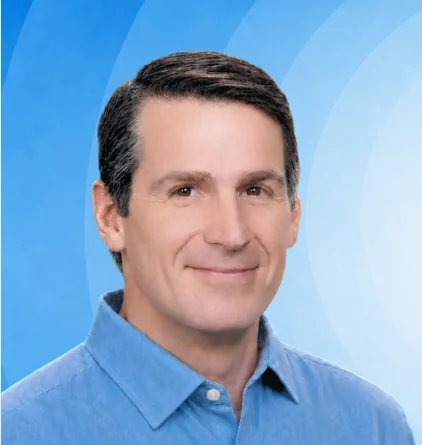
Host and audience advocate.
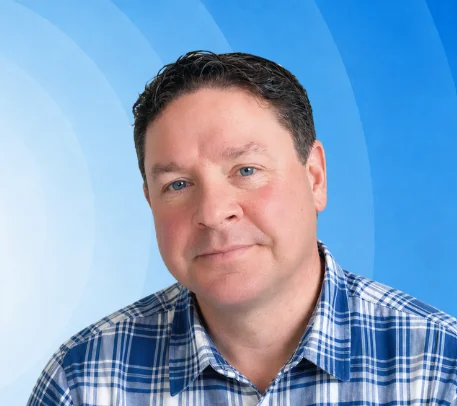
Resident aging expert.
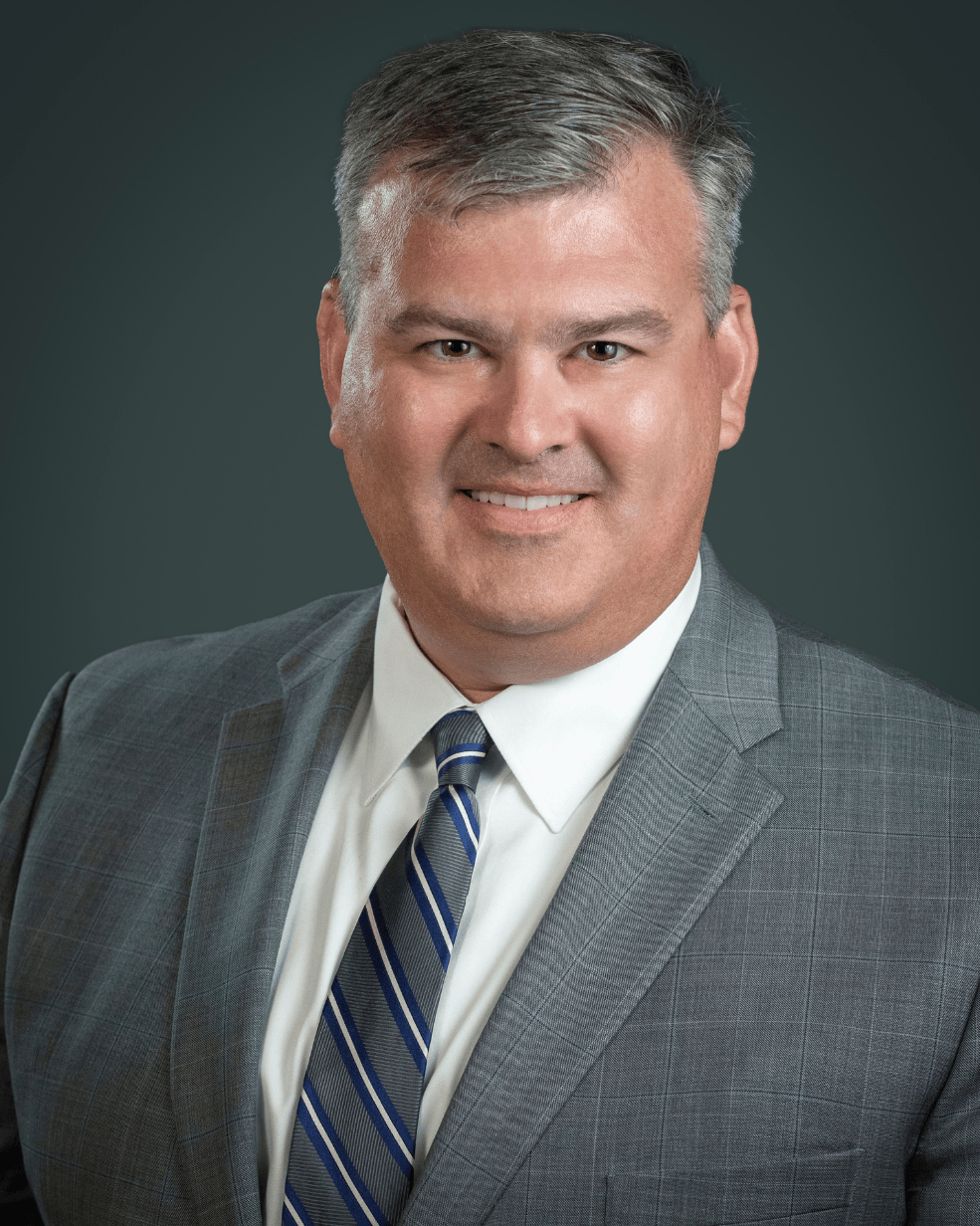
Our guest
Director, Utah Division of Aging and Adult Services.
Alan Ormsby participates in his personal capacity. Aging Amazing is independent and is not an AARP production.
Read Episode transcript
Transcript timestamps refer to the supplied document. Use the chapter guide above for final-video navigation.
You don't have to look back very far in history to know that getting older in America used to look a lot different than it does today. Back then, there were families helping families, there were churches, charities, and local organizations all doing what they could. There were even a few government programs.
But if an older adult needed meals, if they needed transportation, or if they just needed someone to help figure out where to turn, there really wasn't much of a system designed to make that happen. That all began to change in 1965 with something called the Older Americans Act. Its goal was to create a coordinated nationwide network with a single mission: to help older adults live with greater health, dignity, and independence.
Today, we'll be talking with someone who knows that system from the inside out, and more importantly, how that system can help you or an older adult that you love.
[00:01:00] Andrew GraftWith that, welcome to Aging Amazing, the podcast dedicated to older adults and the people who love them. I am your host, Andrew Graft, and joining me as our show's resident expert on aging is my colleague and good friend, Alan Ormsby. Hello, my friend.
[00:01:21] Alan OrmsbyHey, how are you?
[00:01:22] Andrew GraftI am delightful again, as always. You know, Alan, one of the best parts about hosting a show like this is not just the learning that comes along with it, and there's been a lot obviously, but also the amazing human beings like yourself that I get to learn from along the way.
And our guest today, as I am sure you will agree, is another one of those people. He is the director of the Division of Aging and Adult Services for the state of Utah, and he's with us today to help us understand how America's aging services system works, as well as to take a deeper look into how Utah state government works to protect older adults from abuse, neglect, and exploitation.
And with that, Nels Holmgren, I hereby welcome you to the show.
[00:02:19] Nels HolmgrenIt is wonderful to be here. I was waiting to see what amazing person was going to be introduced, and imagine my shock when it's me.
[00:02:26] Andrew GraftAh. You know, usually I'd be like, "Yeah, well, we brought you here to help find that
[00:02:32] Nels HolmgrenYeah, exactly.
[00:02:34] Andrew Graftperson." But I know better and I know Alan knows better. You are indeed that person.
[00:02:39] Nels HolmgrenYou are very kind. Thank you for having me.
[00:02:41] Andrew GraftWell, it is our pleasure. Let's get right into it. What exactly is the Division of Aging and Adult Services? What does it do? Why does it exist?
[00:02:56] Nels HolmgrenAbsolutely. It's a great question. The Division of Aging and Adult Services here in Utah is the state unit on aging, and we'll talk a bit more about the Older Americans Act that covers aging services. But every state needs to have a state unit on aging. The Utah Division of Aging and Adult Services is that unit for our state, and our job is to coordinate government aging services across the state. We have three offices here in our division.
We have the Office of Public Guardian. Our division serves as the guardian of last resort for adults who, for whatever reason, may need a guardian.
We also have the Office of Adult Protective Services.
This is the group that investigates and works to resolve cases of abuse, neglect, exploitation, financial exploitation of not only older adults, but also adults over the age of 18 who have a disability that makes them vulnerable according to statute.
[00:04:04] Andrew GraftOh.
[00:04:05] Nels HolmgrenAnd the third office is the Office of Older Americans Act Services. This is the group that works with our county partners to provide Meals on Wheels, senior center activities, in-home services, caregiver support, those classic aging services. So we're kind of a three-prong approach here, looking at really protecting many of Utah's most vulnerable individuals, as well as older adults that are living their lives and doing the things they had always planned to but may want some additional support or additional participation.
[00:04:40] Andrew GraftSo you guys are the Meals on Wheels people. Now I know.
[00:04:44] Nels HolmgrenYeah. You know, I always joke that when we present at the legislature that we should be called the Division of Meals on Wheels and Other Great Things, because Meals on Wheels is something that everybody gets, like, right off. They can connect with that.
They understand what that is. And so, it's a great entry point for a lot of people in terms of understanding what we do.
[00:05:03] Andrew GraftTo kinda help set the table for listeners who maybe aren't as familiar with all the work that you do and what Alan does, you referenced a second ago that you're the Utah state version of this, so does this mean every state in the union has someone like you who is responsible for overseeing the aging services community?
[00:05:27] Nels HolmgrenI hope they don't have someone like me, but they have somebody in that position. Yes, every state has to have a state unit on aging. Every state is unique in terms of how they're structured and budgets and, you know, some of the emphasis points. But in all cases, the state unit is the one that essentially is accountable to the federal government for the federal funds that are allocated for these services to each state. Each one is unique, but those kinda classic services, Meals on Wheels, senior centers, caregiver support, those are all part of the Older Americans Act, and they're included in every state.
[00:06:06] Andrew GraftIs it safe to assume, you know, as someone who is relatively new to this legislation, one of the things that kind of struck me, and you've touched on it, is that it seems to be a relatively organized structure of federal, state, local. Is that a fair assessment of exactly what this has done?
[00:06:31] Nels HolmgrenAbsolutely, and I think it makes it incredibly easy to direct people to services in their area. Here at the Division of Aging, obviously we're here in Salt Lake, we frequently get calls from people asking "How do I access services? Who can I speak with?" Or, "Who can I put my mother in contact with?" And we ask the question, "What county does she live in?" Or, "What county do you live in?" And we can immediately connect them with the people that are responsible for service delivery in that area. I always say, you know, people love to complain about the government, and it's often easy to do.
But by design, the Older Americans Act pushes as much control, as much preference for services down to the most local level. So obviously, we have requirements that we have to meet from the federal government and the state has some additional requirements. But then when that money goes out to the area agencies on aging across the state, there's really an emphasis on what do people in your area want? And people living in Salt Lake County have very different needs and interests than someone living in San Juan County.
[00:07:36] Andrew GraftWhich is, for those who are not in Utah, a very rural...
[00:07:39] Nels HolmgrenYeah.
[00:07:40] Andrew Graftcommunity.
[00:07:41] Nels HolmgrenIt's an amazing place, with some real logistical challenges of living there. But very rural, and even in different rural areas, they're not the same as other rural areas.
I think that's one of the real brilliant parts of the Older Americans Act.
It is not a one-size-fits-all cram-down from Washington, DC.
[00:07:59] Alan OrmsbySo let me add that the Area Agencies on Aging, I think are one of the best-kept secrets, and people just don't know how good those services really are.
What can we do, what do you do, to reach out to folks and let them know, "Hey, your first step is to check with those area agencies"?
[00:08:21] Nels HolmgrenWell, anyone who calls our offices with questions or looking for resources, obviously that's the first route that we take is connecting them with Area Agencies on Aging.
I frequently will have people call me and say, "Hey, we'd like to do a presentation in your senior centers." And I would say, "We don't have any senior centers. We have partners that have senior centers, and we connect them." So what these area agencies are able to do with the resources available to them is really amazing. And again, they know the people in their communities and they're always looking for additional people in their communities who would benefit from these services.
And so we're always kinda beating the drum for our area agencies.
[00:09:03] Andrew GraftYou know what I think is fascinating, first of all, I've mentioned in past episodes kinda how I came to the world of aging as it relates to my parents and some of the urgent medical issues that we were facing in my family. And of course, you know, Alan and I have been friends forever, and I turned to him and said, "Hey, you know, how can you help me? What can I do?" And he said, "I've got the great first step for you. Go to your area agency on aging right there in your county." And this is someone who, like, is an aging expert, and he said, "That's where you want to start." And for anyone who's watching today and saying, "Okay, wait. Where does this area agency on aging come in?" The way I think of it, it's the local part of the system. You've got local parts of the system, state parts of the system, and the federal parts of the system.
And when Nels says, "Reach out to your area agency on aging," he's not passing the buck. He's saying, "Go. Let me get you in touch with the person close to you."
[00:10:09] Nels HolmgrenAnd it's where the rubber meets the road. It's where stuff actually happens. We work very hard at the Division of Aging to remove obstacles, fulfill all of those sort of obligations that need to be met to the federal government and to our state policymakers and trying to clear the decks and facilitate as much as possible for the area agencies who are the ones who actually do the work.
You know, we'll frequently get people calling and saying, "I have a question about Meals on Wheels," or, "I have a question about in-home services." And we tell them, "If you'll contact the area agency on aging, they'll ask you some questions. And they're not trying to pry, but what they're looking at is, yeah, you may have a question about Meals on Wheels, but there may be other things that you're not even thinking of that would be appropriate and be beneficial to you." So I think our area agencies on aging do a great job of kind of looking holistically at people when they call to say, "Yeah, that program would help you, but this one might." Or may say, "Actually, the program you're calling for is not the one that you really need, but here are some other services that would better meet the needs that have prompted this call."
[00:11:15] Andrew GraftI can vouch for the quality of my local area Agency on Aging. I could not believe the extent to which they went to help me understand my options. It felt almost strange because I thought, "Are they gonna bill me for this when it's all done?" Because there's so much that I'm getting from this.
And it was, you know, Alan who mentioned to me, he just said, "Well, that's your tax dollars at work. You have paid for it already."
[00:11:45] Nels HolmgrenYeah. That's true. The other thought you just prompted is, when you call your area agency on aging, because they're a county agency, they're a local agency, they obviously are experts on aging services, but they also tend to be umbrella agencies that look at housing and look at utilities and look at other things that may benefit.
So in addition to being experts on aging services programs, they're very good at helping to connect people to other resources in their communities, and it works because those area agencies are in their communities and they know their sister agencies and partners and can really help to connect people to the things that they need.
[00:12:28] Andrew GraftI love that. So, okay, I'm gonna wanna come back to the Adult Protective Services here in a moment because I know that's a big part of what your office does outside of working with the area agencies on aging. But before we do, let's talk a little bit about some Utah-specific initiatives.
And again, people who watch the show know we're based here in Utah, and so we often have a Utah-specific focus. But that's fine. Let's talk about what we're doing here. Maybe people can compare that with what they're doing in their own states.
Talk to us about the Wise Aging Initiative in Utah. What is it, and what is it meant to accomplish?
[00:13:12] Nels HolmgrenGreat question. The Wise Aging Initiative is the brainchild of Governor Cox, who tasked us as the Utah Division of Aging and Adult Services with carrying out this plan. And really at its core, what it's designed to do is to ask older people and their caregivers and their providers and the people close to them what they want and what they need, and then to develop recommendations based on that.
WISE stands for Wealth, Independence, Security, and Engagement, which are the kinda key elements of all of our lives, but specifically looking at it from the lens of older people. And so as part of this effort, we did eight in-person listening sessions in various regions across the state, had great feedback and attendance from older people as well as local policymakers, providers, and different agencies that came together.
From that, we developed work groups that worked through to come up with some concrete recommendations based on the feedback that was received. That final plan was just released a few weeks ago. And now we're beating the bushes for individuals that would like to participate in implementation groups and as importantly, people that would like to lead implementation groups.
At the end of the day, the plan is, over the next ten years, to put these things in place that have real concrete benefit for the older people here in Utah.
[00:14:37] Andrew GraftFantastic. As it relates to those conversations with seniors and caregivers and the entire aging community, what were some of the learnings that the commission took away?
[00:14:48] Nels HolmgrenYou know, it's surprising how not surprising it was. A lot of the feedback we heard were themes that we all have at every stage of our lives.
People were concerned about housing and the availability of housing and appropriate housing.
They were worried about financial issues and preparing for the future and making sure that the things that they had saved and those resources were safe and being used appropriately.
We heard a lot about engagement. People want to be in their communities. They've grown up in these communities. They've been involved. They wanna stay involved, and not only as a participant, but as a contributor, and engaging with other people and those sort of things that are really kind of universal.
You know, inflation, the cost of things, affordability issues. We heard that a lot.
We heard a lot about transportation. People wanna do the things they wanna do, and they wanna be able to get there in a safe and efficient way.
And so a lot of the themes that came out of it are the themes that we all have at probably every stage of our lives, but it was interesting to hear them with that slant and that particular angle from older adults.
[00:16:00] Alan OrmsbyI was able to attend several of those round tables. I was struck by how multigenerational the issues were. The older adults cared about education issues, safety issues, housing. It ran the gamut, and it was really interesting and very affirming that older people really do care about society in general.
[00:16:26] Nels HolmgrenYeah, this is not a group of people that are like, "Hey, we've paid up, and now we're ready to kick back and get what we're looking for." To your point, education is a major theme that people in this cohort talk about all the time because they look at their own education, and then they look at their children and grandchildren and, in many cases, great-grandchildren, and they want those same opportunities, and they care deeply about that as well.
[00:16:50] Andrew GraftDoes the WISE initiative do some targeted work around that for the aging community? Or does it look at it as sort of like, "Well, yeah, everyone wants that. We're gonna try to improve that for everybody"?
[00:17:01] Nels HolmgrenYeah, that's a great question. It is definitely gauged towards the needs of older people. Obviously, the mandate of this particular initiative is specifically to look at the needs and wishes of older people.
That said, I think a lot of the recommendations and a lot of the outcome for these things will benefit the community generally.
[00:17:20] Andrew GraftWell, I'm very excited to see what comes from the WISE initiative. It sounds like there is a ton of really good, crunchy stuff we can look forward to.
Let's turn a minute. Let's go from sort of the high-level planning. Let's talk about the adult protective services side of what you do.
[00:17:43] Andrew GraftFor someone who is new to the whole concept of adult protective services, give someone a real sense of what it is, why it exists, where it comes from. I mean, it sounds like, you know, adult protective services, but why are adults needing to be protected, and what are they being protected from?
[00:18:07] Nels HolmgrenYou know, it's a variety of things. Our role as Adult Protective Services is to eliminate risk or to mitigate risk that people have. Again, physical abuse and some horrible things, you think of sexual abuse and emotional abuse. The first thing I tell people is adult protective services are not the police. We work very closely with police, and there are situations that would absolutely require law enforcement intervention and action to resolve things. If someone is being physically abused, that's a crime, and both Adult Protective Services and the police would work on that.
In this age, financial exploitation is a rapidly growing segment of what we do.
Those are incredibly difficult. We work with banks and financial institutions to make sure that those are being resolved.
And again, there's a huge swath of what we do, just helping people. We frequently get people saying, "I'm worried about my neighbor. Since his wife passed away, it just doesn't seem like he's caring for himself."
And so Adult Protective Services, many of whom have social work backgrounds, will go in and work to connect them to other resources. They're a real connector to the area agencies.
At the same time, we are respectful of, you know, the fact that this is not Child Protective Services.
The people that we're talking to are adults, and adults get to make decisions and get to make preferences. And, you know, you'll have somebody say, "I'm worried about my neighbor. He just lives in his bathrobe and, from what I can tell, just eats milkshakes all day, and that's all his nutrition." And we'll send somebody in, and that person will say, "Yeah, I get to wear my bathrobe and eat milkshakes all day if that's what I wanna do because I've earned it. I'm an adult." And of course, we respect that. And, you know, in some cases, people may not have the ability to make decisions and may be compromised that way. But that's not most of the people, and so we work very hard to be respectful of their wishes. And, you know, people have the right to live the way they want.
[00:20:19] Alan OrmsbyNels, who is responsible for reporting if they see some kind of a problem that they think is due for Adult Protective Services?
[00:20:31] Nels HolmgrenThat's a great question. Utah is what's called a mandatory reporting state, which means that anyone who suspects abuse, neglect, or exploitation or witnesses it is legally required to report that.
We tell people all the time, when in doubt make a report to Adult Protective Services. Maybe it's nothing, but let's err on the side of caution. One of the things I think is hard is because of privacy issues. A lot of times people make a report and they don't hear a lot back because, again, we're talking about adults and we need to respect their privacy and make sure that we're not, you know, speaking out of turn.
And the number, I'm gonna read it off a screen because I'm terrible with phone numbers. But in Utah anyway, 1-800-371-7897 is the number for Adult Protective Services. If you were to Google Adult Protective Services, this will come up.
There's also a place to make an online, electronic referral. And, obviously, that is our state-specific version. Every state has this. If you google Adult Protective Services in any state, you will be connected with that group in your area.
[00:21:44] Andrew GraftListeners, as always, we are gonna try to pack the show description with as much of these resources as possible, including the phone number, including the link to these forms. So you're gonna have a lot of ways to be able to get access to this information.
[00:22:02] Alan OrmsbySo, Nels, you've been doing this a long time. You've made a huge impact throughout your career. What's your favorite part of being the state director?
[00:22:12] Nels HolmgrenI think the best part is just the people you get to interact with, both in terms of the clients and the individuals that are served. Sadly, at the state level, we have a lot less interaction with the actual people. If I visit an area agency, that's the best part, is being able to go into a senior center and chat with amazing people that have great stories, and often really great jokes, and sometimes inappropriate jokes, but who are just fun and vibrant.
But, in addition to the actual people that we serve, the people that we get to work with in serving those people are remarkable. We have great partnerships and great friendships with local agencies, with other state agencies, with partner organizations. There are just a lot of amazing people doing incredible work to serve older adults, and it is a real privilege to work with those people.
[00:23:06] Andrew GraftSo Nels, looking back after so many years of experience, what, if anything, do you wish your parents would've known about the support system that exists for older adults?
[00:23:17] Nels HolmgrenYou know, it's really interesting, and I use my parents as an example all the time.
My dad passed away. He was almost 80 years old. He had had Parkinson's disease, which made his last years complicated and ultimately ended his life. He had planned well, he had saved, he had worked incredibly hard, and he had a lot of family nearby that he had great relationships with. He didn't need our services at all. He never had a need. I don't think he ever really thought about using our services, and that's fine.
In hindsight, my mom really could've benefited from some caregiver support even though she had us. As a family, and particularly my sister, as all good families have a sister that can jump in on these things, I think we worked very hard to help share the load.
But my mom certainly could've benefited from aging services and caregiver support when my dad was alive. At the end of my mom's life, she had some real needs. She had some medical issues and needed some round-the-clock care and some things that she was able to leverage services for, more on the private side of things.
And again, she had planned well and that was great, but it's almost a tale of two cities, a tale of two parents. My dad was really sort of independent and didn't need much, and my mom, on the other hand, needed some strong support and was able to access them. So I really think that there's this continuum of need out there and we have a continuum of services to go along with it. We wanna be kinda specific in what people need and support them at that level.
[00:25:12] Andrew GraftFantastic. So, I mean, having done this as long as you have, are there some, I don't know, heroes, unsung heroes of the aging community that you feel like deserve a shout-out?
[00:25:25] Nels HolmgrenI would say the major unsung heroes of this network serving older adults are the caregivers we don't know.
You know, there are thousands of them across the state, there are millions of them across the country, that are doing all kinds of things. And sometimes those are family members, sometimes those are extended family members, sometimes it's neighbors. I had a very touching thing in my community.
I had a chance to meet with a lady in her 90s. She's in kind of a cancer situation and she is very sharp and has said, "I'm done. I'm not doing this anymore." And, I had a chance to visit with her, and another family in our neighborhood had basically adopted her. And, you know, the kids had written her pictures and they had, you know, knitted a blanket, a quilt for her, and all of these things that I thought, "You know, you're never gonna hear about those people," but in terms of her wellbeing in these last maybe months of her life, those are tremendous connections.
And again, you've got adult children, and you've got nieces and nephews, and in some cases siblings and spouses that are providing so much care. Alan probably knows some of these off the top of his head, but what the cost of those services would be, all of that informal care and all of those people serving older people, if you had to pay for those, I mean, it's an astronomical number.
[00:26:56] Alan OrmsbyIn Utah alone, 9.9 billion dollars.
[00:27:03] Andrew GraftWhat?
[00:27:04] Nels HolmgrenThat's the value of those unpaid caregivers.
[00:27:07] Andrew GraftHoly cow!
[00:27:08] Nels HolmgrenYeah.
[00:27:16] Andrew GraftThat's incredible.
[00:27:17] Nels HolmgrenYeah. Yeah, and incredible people. And again, for most of us, we don't think anything of it because we love our neighbors and our parents and our family members, and we're happy to do it. But it's every day in many of these cases, and it's not always easy. And, having those people willing to get in there every day and wash clothes and cook meals and, you know, do all of that stuff, it's remarkable.
[00:27:45] Andrew GraftWell, I have to tell you, Nels, this has been fantastic.
Such great information. I know we've only scratched the surface, and I will tell you, you are welcome back anytime. I'll be hassling you and dogging you to see if I can get you back on the show in the future.
[00:28:06] Nels HolmgrenYou don't need to hassle me, and I would say thank you for doing this. This is an amazing resource and just the light that you're shining on things, I just appreciate both of you for what you're doing.
This is terrific.
[00:28:19] Andrew GraftWell, it has been, as Alan and I have said, it's been a labor of love. And to your point, we've met, Alan more so than me, but amazing people, yourself included. This really is very fulfilling work and just, you know, kudos to you for everything that you've done for people like my parents.
[00:28:40] Andrew GraftI know they greatly appreciate it.
[00:28:42] Nels HolmgrenAnd again, as they say at Chick-fil-A, it's our pleasure. Again, thanks for the opportunity to come on and share some things, and would love to provide any additional information for this audience, or anyone out there who has questions.
We are available and happy to answer questions and more importantly to connect to people at the local level who do incredible things.
[00:29:08] Andrew GraftCount on it. We'll have all your contact information, as we talked about, in the show description. Again, thank you, Alan, as always. Thank you so much. I really appreciate all your support in this effort and this initiative. And I guess, most importantly, to our listeners, thank you for tuning in to today's episode of Aging Amazing.
A reminder, be sure to subscribe to our YouTube channel so that you know exactly when each new episode goes live. But until then, stay safe, stay healthy, and stay amazing, everyone.
Aging Amazing Updates
New episodes and useful resources to help you navigate aging with more confidence.
Free email updates. Unsubscribe anytime. Privacy notice
We use MailerLite to send Aging Amazing Updates. Signing up shares your email and optional first name with our email provider. MailerLite privacy policy ↗
Form not appearing? Open the signup form ↗