What has changed?
Think about your health needs, prescriptions and providers. Review your plan’s Annual Notice of Change and verify the details that matter to you.
 Get email updates
Medicare Choosing coverage for 2027
Your needs can change. So can your coverage. Andrew and Alan welcome Medicare educator Darren Hotton to help make sense of the choices – and where to find free help.
Episode guide In this conversation
Explore Original Medicare, Medicare Advantage, prescription drug coverage and supplements, then learn how to get help reviewing your own options.
At a glance Key takeaways
Think about your health needs, prescriptions and providers. Review your plan’s Annual Notice of Change and verify the details that matter to you.
Compare premiums alongside deductibles, copays and other out-of-pocket expenses. The conversation’s dollar examples are not personalized quotes.
SHIP counselors offer free, unbiased help reviewing Medicare choices. Bring your questions and the information about your coverage and care.
The conversation Editorial summary
Choosing Medicare coverage can feel complicated, especially when plan benefits, premiums, doctors and prescriptions change from year to year. Andrew Graft and Alan Ormsby speak with Darren Hotton, AARP Utah community outreach director and longtime Medicare educator, about the differences between Original Medicare and Medicare Advantage, the role of prescription drug plans and Medigap, and the decisions worth revisiting during annual Open Enrollment.
Darren introduces the free, unbiased SHIP counseling program, where people can get help comparing coverage options. The conversation encourages viewers to review their needs and ask questions before deciding whether to make a change for 2027.
Take action Official resources
Open Enrollment runs October 15–December 7, 2026, for coverage beginning January 1, 2027.
Find your local SHIP program or call 1-877-839-2675.
Visit resource ↗Compare Medicare plansReview plans available where you live, including prescription coverage and costs.
Visit resource ↗Open Enrollment rulesUnderstand the changes you can make during annual Open Enrollment.
Visit resource ↗Your Annual Notice of ChangeReview your plan’s changes for next year. Contact your plan if you need another copy.
Visit resource ↗Medicare costsLook beyond the monthly premium when comparing coverage.
Visit resource ↗Medigap timing and eligibilityCheck your ability to buy a supplement before changing coverage.
Visit resource ↗Call 1-800-541-7735 for local Medicare counseling. Outside Utah, use the national SHIP locator above.
Find Utah help ↗General education, not individualized insurance, medical, legal or financial advice. Confirm coverage, eligibility and costs with official plan documents, Medicare.gov or a SHIP counselor.
Medicare Advantage out-of-pocket limits vary by plan; premiums and Part D expenses are separate. The 2027 out-of-pocket threshold for covered Part D drugs is $2,400, rather than the $2,000 mentioned in the interview. Switching to Original Medicare does not always guarantee access to Medigap. Initial enrollment follows different rules from annual Open Enrollment.
Resources reviewed October 10, 2026.
Aging Amazing The people in this conversation
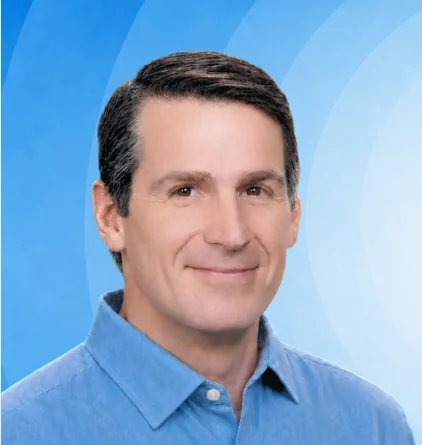
Host & audience advocate
Andrew brings curiosity, family perspective and questions that keep the conversation grounded in everyday life.

Resident aging expert
Alan draws on decades of work in aging services, law, policy and the support systems older adults and families navigate.

Guest & Medicare educator
AARP Utah community outreach director and longtime Medicare educator.
Aging Amazing is an independent podcast, not an AARP production. Guests and contributors share educational insights in their individual capacities; participation does not constitute an official AARP policy statement or endorsement.
Read Episode transcript
This transcript follows the recorded conversation, lightly edited for readability to remove vocal fillers, stutters, and false starts while preserving meaning. For Medicare cost and coverage clarifications, see the notes in Resources. Timestamps are approximate.
Andrew GraftAh, Medicare. If you're an adult over the age of 65, you already know exactly what I'm talking about. Or do you? You see, every October, older Americans everywhere start the process of deciding what their medical coverage for the new year is going to be. And for most people, Medicare is anything but easy to fully understand. Part A, Part B, Part C. It's like Sesame Street for adults. That's why it helps to have an expert in your corner to help make sense of it all, and resources that can help make your annual decisions that much simpler. Which brings us to our episode today.
Andrew GraftWith that, welcome to another edition of Aging Amazing, the podcast dedicated to older adults and the people who love them. I am your host, Andrew Graft, and joining me as our show's resident expert on aging is my colleague and good friend, Alan Ormsby. Hello, my friend.
Alan OrmsbyHey, how are you?
Andrew GraftI'm doing very well. Listen, I've got a question for you, my friend. First of all, you've heard of Medicare, right?
Alan OrmsbyOh yeah, a little bit.
Andrew GraftYeah, I mean, look, I know you've been in this world for like 20-something years, but I really couldn't be certain that maybe you'd heard of Medicare. But now that I know that, to be clear, that is not my question that I have for you. The question I have for you is this: Of all Americans age 65 and older, what percent would you guess are enrolled in Medicare?
Alan OrmsbyWow. Of all Americans, so we're talking all citizens.
Andrew GraftAll Americans age 65 and older specifically.
Alan OrmsbyOkay. I'm gonna go with 92%.
Andrew GraftThat is an excellent guess, and you'd think 92%. I have to tell you, 96%.
Alan OrmsbyWow. That's actually remarkable when you think about it. You can't get 96% of people to agree on anything.
Andrew GraftAnything, right? 96%. So for something that is so ubiquitous, sometimes I wonder whether we should be talking about it as a society more frequently. Because that's millions of people who are involved with Medicare. And right now, those millions of people, they're all going through what is called, as they know, the annual open enrollment process. And given the number of people who are doing this, it would seem appropriate that maybe we should be having a conversation about this. I don't know, what do you think?
Alan OrmsbyI think that's a great idea. So even though I am fairly expert in the field of aging, I don't know enough about Medicare to be considered expert, honestly, and it's complicated. There's a lot that goes into it. It's amazing to me that ninety-six percent of people over the age of sixty-five have it, and every year they get this wonderful open enrollment. I wonder how many of them actually take advantage of the opportunity to really think this through.
Andrew GraftYeah, my guess is probably not enough. So that kind of brings us to our guest today. Like Alan, he is part of the AARP Utah team, and he is indeed an expert on Medicare. So with that, it is our pleasure to welcome to the show Darren Hotton. Darren, hello.
Darren HottonHello. How are you guys?
Andrew GraftOh, it is a lovely day in paradise. I cannot complain, and I know Alan feels the same way. But to be clear, thank you so much for being here. This is such an important topic, and the idea that we can talk to someone who has been as close to it as you have been is incredibly valuable. So before we dive into Medicare specifically, let's just start by having you tell us a little about yourself and what your current role is at AARP Utah.
Darren HottonSo my current role at AARP Utah is the community outreach director, and I also do volunteer management for all the volunteers for AARP. That's what I do right now at AARP. Prior to that, I worked at the dark side. I worked for several different insurance companies, happened to pay Medicare claims for railroad retirees. Then I moved over to the insurance department, and I decided to be the big stick and say, "You guys need to follow state rules." And I got tired of that, and I moved to the Division of Aging and Adult Services, where I was the Medicare education and outreach coordinator, program manager for 20 years.
Andrew GraftWow.
Alan OrmsbyThat's where I had a chance to meet Darren. Darren and I worked together in the day at the Division of Aging and Adult Services.
Andrew GraftWow. So this is the best we could do? A 20-year expert in Medicare? Well, I suppose if we have to start here, we have to start somewhere. Obviously I'm joking, Darren. Thank you. Thank you so much. This is gonna be a great conversation. So for someone who is possibly approaching Medicare for the very first time, let's start with the basics. What is it? Who is it designed for? What should people be thinking about when they think about Medicare?
Darren HottonSo Medicare is the federal qualified health plan for people who qualify either because of age, over age sixty-five, or because of disability after two years of qualifying for disability through Social Security. That health plan provides them medical coverage. And Medicare has two parts. There's original Medicare, which has been around the longest. And we have Medicare Advantage plans that have been on and off over the last several decades. So when a person comes into Medicare or is eligible for Medicare, they're given a choice. But just to be safe, Medicare puts them in original Medicare A and B, which is the hospital coverage, Part A. We have the outpatient coverage is Part B, and we have the prescription drug coverage, which is Part D. And Medicare puts them into A and B automatically. They don't have to do anything. During their initial enrollment, they're allowed to move to Medicare Advantage, which is Part C, which is a combination of A, B, and D. They can stay with original Medicare and pick up a prescription drug plan, Part D.
Andrew GraftWhen my parents—and frankly, most older adults that I speak to—hear about Medicare and Medicare Advantage, there is a kind of a grand assumption that they are the same thing, and at the very least, that they are provided by the same organization. But that's not true, is it?
Darren HottonThat's not true because Medicare A and B is administered by several different companies around the United States. Medicare doesn't actually pay anything. They pay somebody else to pay for original Medicare and pay the claims. Medicare Advantage plans are private insurance companies that come to Medicare, set up contracts to be the fiduciary or responsible for the clients under that policy, so they assume all the risk, and Medicare pays them, the insurance company, to take care of them. So they have two choices. They have one that's on their own that Medicare just administers, or they go through the private insurance company, and then that insurance company takes over. The difference is you will never see an advertisement for original Medicare. You will never see it because it's just there. Everything on the television starting October 1st is always Medicare Advantage plans.
Andrew GraftSo it's funny, you talked about the letters, right? Part A, part B. And I think if you have, like, this much exposure to Medicare, you've heard about these letters. And I think you've done a really good job of kind of explaining them. But to be clear, A, B, and D, that's original Medicare. C is all by itself, but it can include all of those things, correct?
Darren HottonSo original Medicare is only A and B. That's what original Medicare is. That's the default coverage no matter what you do when you're eligible. You get A and B. You have to do something to get Part C or Medicare Advantage plans and Part D. You have to physically enroll, not in person, but you have to do something to…
Andrew GraftYes, right.
Darren Hotton…enroll. But original Medicare is only A and B. Everything else is Medicare Advantage of some style. But terminology-wise, Medicare Advantage is only Part C. The standalone prescription drug plans are Part D.
Andrew GraftOkay. All right. So talk to us a little bit about the difference between the two. Because I know a lot of the people who are obviously enrolling, they're facing that question right now, I would assume.
Darren HottonOkay? So Original Medicare A and B is just like you would think a public health plan would be. You go to a provider who provides Medicare coverage, A and B. That provider bills for them, and they can see any doctor they want, they can go as many times as they want, they don't have to get any authorizations. It's just go, get service, and then go home. Medicare Advantage Plan is just like your employer plan that you had while you were growing up. They tell you where to go, they tell you the doctors who you have to see, they choose the insurance company for you, they decide how much you have to pay. That's what Medicare Advantage plans are like. They have more control, more decision than Original Medicare, 'cause Original Medicare has deductibles and co-insurance, but doesn't care who you see as long as they accept Medicare.
Andrew GraftThen—
Alan OrmsbyIt sounded like the Medicare Part A and B is pure magic because you can go as many times as you want, and it's every doctor. What's the downside of A and B?
Darren HottonSo the downside of A and B is that currently, there's nothing in place to stop certain types of coinsurance or the pain of several deductibles. And what I mean by that is this. If you go to an inpatient hospital and they have a copay for the first 60 days that you're there, if you're there and go out of it, and you're out of the hospital for three months and go back into the hospital again, you're gonna pay another copay, another deductible again. There's no stopgap for it. Part B, you're gonna pay your deductible, an unlimited 20% for the whole year. Congress is trying to change that so that there will be, but on Medicare Advantage, every plan has a maximum out-of-pocket. So no matter what, you'll pay premiums, and you'll pay coinsurance and copays, but there's always a stop. So it's around $7,500. For prescription drugs, the last couple of years, they finally put a maximum out-of-pocket for that, and that's $2,000.
Andrew GraftSo wait. I was with you on original Medicare: no rules, it's magic. But you're saying the downside is there's no maximum that I might have to pay on the co-insurance side if things go south?
Darren HottonThat's right. For the hospital, if you go in because you slipped and fell and hurt your back. Let's say you're in the hospital for five days, you go to a skilled nursing facility or rehab for 20 days, and you come back and you're doing just fine. 60 days later, you're out playing in your yard with your grandkids and one of them hits you with their motorcycle 'cause you didn't get out of the way fast enough, you're back in the hospital. You have another deductible again.
Andrew GraftWow. So now I'm like jumping back over the fence. I'm like, "Well then Medicare Advantage seems to be the advantage because it has a maximum that I have to pay." If I wanna be on original Medicare and I don't wanna have unlimited possible risk and payments, what do I do?
Darren HottonSo for unlimited risk or to get some help with those payments for Part A and Part B, there are Medicare supplement plans that provide coverage for the leftover costs of original Medicare. The problem with Medicare supplements is that they only provide services for covered services under Medicare. So a Medicare Advantage plan might provide services that Medicare doesn't cover, and you have to pay for that completely out of your pocket. Supplement plans are great for people who know that they're gonna have a lot of medical expenses, and so as long as they pay their premiums, they get that coverage that they need, and they don't have to worry about a $7,500 out-of-pocket.
Andrew GraftCan Medicare Advantage plans be wildly different? Like, do they have any rules that they have to follow, or is it like the Wild West?
Darren HottonNo, they have rules that is put into place. They're told, "You still have to provide exactly the same benefits as under Original Medicare Part A and Part B." But they have the ability to go crazy and offer additional coverage, and that's what insurance companies are really good at because they have other provider networks, they have other benefits that Medicare doesn't cover, like routine vision, routine hearing, routine dental. They have those because it's part of their insurance network, where Original Medicare is bound by just inpatient and outpatient. That's all the rule for Original Medicare allows.
Alan OrmsbySo Darren, I was being a little facetious and silly, of course, but there's trade-offs to each one of these plans, isn't there?
Darren HottonYes.
Alan OrmsbyThat's what Medicare open enrollment really is all about, right? We take a look at our health, how we're doing, what our medical needs are, what we anticipate the needs are for the coming year, and make decisions about all of those different trade-offs.
Darren HottonCorrect. So Medicare open enrollment allows a person to move back and forth from original Medicare to a Medicare Advantage plan. It allows a person to pick up prescription drug plan, Part D. It allows them to switch from a Part D plan to another Part D plan, or go from Medicare and a Part D plan to a Medicare Advantage plan with drug coverage. There's all those different options there. So, like, a person who's healthy and been on original Medicare and didn't need any of that extra stuff, but started to get sick and needed a little bit better coverage, this is a opportunity for them to switch to Medicare Advantage and just pay co-pays. Where you could have been fine and have a least costly prescription drug plan, and now you would move to a better coverage prescription drug plan because your needs have changed.
Alan OrmsbySo Darren, it sounds like there are quite a few different parameters to be thinking about when you're considering what you're going to do in open enrollment. Is there any guidance that's out there that can help people that's not biased, somebody's not trying to sell you something, just gives you the kind of plain language, here's what might be consideration for you?
Darren HottonSure. So in every state, the federal government through the Administration for Community Living, ACL, provides money to every state to provide what is called as the SHIP program, State Health Insurance Information Assistance Program. I know that's not how you spell SHIP, but the acronym is SHIP, and these counselors in every state provide unbiased information on all the plans or all the prescription plans that are available in your area. They can walk you through it. If you want to talk about Medicare and a standalone drug plan, they'll help you with that. If you want help with Medicare Advantage, they'll talk to you about your provider that you go to, make sure your provider's in that network. They'll talk about how much it'll cost, the co-pays and premiums. All those things are there, and that SHIP counselor will walk you through it, and what they use is the Medicare Plan Finder, and the Plan Finder provides them with all the information of which plan is the cheapest to which plan is the most expensive. They can help facilitate that enrollment into that plan. So the person doesn't have to do anything. They can just be there and let that counselor help them through the process, and they'll get the coverage that they need and not have to stress about trying to do things on their own or trying to figure out everything on their own. That's what their job is to do.
Andrew GraftThat's really good. Do they charge you for this service?
Darren HottonNo, they don't charge you for it. It's free. However, it does get busy as open enrollment continues. So they're gonna have more open slots at the first part of open enrollment, where if you wait until the very end of it, they might not have room to get you in for a counseling session.
Andrew GraftAnd say again, what the range of dates? When does open enrollment end?
Darren HottonSo open enrollment starts on October 15th and ends on December 7th. That allows all of the information to feed through the Medicare computer system to get to the insurance companies or to Medicare to make sure your plan that you chose is in place by January 1st of 2027.
Andrew GraftFantastic. So, you know, when we were talking before, Darren, you mentioned to me that one of the biggest mistakes that happen with Medicare is treating it like set it and forget it. Is that a good idea?
Darren HottonTo me, the answer is no. Medicare unfortunately has given all of their Medicare beneficiaries too many options. When they gave them too many options, it's provided all of this information and all these different plans. Unfortunately, most Medicare beneficiaries don't know how to find all the information for all the plans. When I was a counselor, I had a guy come out to me. He brought an Excel spreadsheet. He plopped it on the desk in front of me, said, "I've been doing this for the last 10 hours researching these plans." He goes, "Find me a better plan." And I pulled up the Medicare plan finder. I entered his prescriptions in. He told me where his doctors were, and I found him a better plan in 15 minutes. He was so angry with me. I said, "Don't be angry with me. Just be happy that I found you a better plan, but I did find you a better plan."
Andrew GraftHow dare you, sir?
Darren HottonWhen we say set it and forget it mentality, they just wanna get into Medicare and not ever have to worry about it.
Andrew GraftI think that is really good counsel. So when we were talking before, you mentioned the thing that sort of, I don't know, kicks this off, for lack of a better term, with individual Medicare enrollees is some stuff they get in the mail. Talk to us briefly about what that is, what they should be looking for, and if maybe they've already missed it, like, what do they do?
Darren HottonOkay. So what they get is this big giant package in the mail on October 1st. It has their insurance company, either the Medicare Advantage plan or their standalone drug plan, they're like, "Wow, this is great." They've never opened it because they never opened the prior letters for all the years they've been on Medicare. They stick it on their table, and they just go on living life. Question back to you guys. When was the last time you read your auto insurance or your homeowner insurance policy?
Alan OrmsbyNever.
Andrew GraftWell, I mean, look, there are times when I have insomnia, and they're great for that.
Darren HottonSo it's part of their being because they've never read their homeowners or their auto insurance, so they're not gonna read the stuff that comes from their insurance company. That is called their annual notice of change. Now, the booklet, it's a big booklet, and it can seem overwhelming, but it's the first five pages of the book or the letter that's the most important to you because it says, "Hey, this is what's changing with the plan. This is the prescriptions that you take that we may or may not be covering anymore. This is the doctor's office we're no longer gonna cover. You have to go somewhere else." They tell you that in the first five pages.
Andrew GraftThey customize that notice to your specific usage?
Darren HottonYes, 'cause they know who you're seeing and the prescriptions that you take. Now, most of the time for providers, it's much larger than that. They'll say, "This particular medical group is leaving," and you'll know that, well, my doctor is in that building, so that's how they let you know. But prescriptions itself, it tells you your prescription and your dose, so it'll tell you specifically changed. Now, you may open up your letter, though, and it'll be blank. It'll just go into the plan changes after that. So you'll know the premium change or if there's a deductible change, but you won't see your prescriptions, so that means your prescriptions and what they now mention in the rest of it is your copay. That's what it'll be different. But at least tells you copay changes and stuff like that.
Andrew GraftGotcha. I don't know if this is the right question to ask, but I'd be curious to know. For most of the people watching, one of the key questions everyone wants to know is, yeah, but how much does this cost me? And I know that range, it varies a great deal. But do you have, like, a ballpark sense of what someone might expect to pay on an annual basis for their older adult Medicare based healthcare?
Darren HottonSure. So everybody on Medicare pays a Part B premium. Most people do not pay a Part A premium because that's free, and they've earned enough work credits or time working and paying FICA taxes, so they don't have to pay for a Part A premium. But Part B has a premium. Everybody pays 25% of the cost. So when they come out and say, "You're gonna pay this," everybody pays it, but they usually don't see that amount because it's taken out of your Social Security check. Outside of that cost, if you look at original Medicare, there's no cost for that, so it's zero. If you want to do original Medicare, Medicare Supplement, the average cost of a Medicare Supplement is $168 a month in Utah. Then if you throw an average Part D plan in there, it's about $30 a month. So you're paying $200 a month under original Medicare for A, B, Medicare Supplement and prescription drug coverage. So for over a year, right, that's $2,400. That's just paying for that and not getting any benefits in return, meaning you didn't actually use it. If you're on a Medicare Advantage plan, most of the Medicare Advantage plans in the state of Utah are free or less than $30. So let's say you pick the plan that's $30. So 30 times 12 is your total out-of-pocket cost for a Medicare Advantage plan if you don't use it, you know, or you just don't have to see the doctor for anything. So right there, there's a huge difference in cost, $2,400 compared to $30 times 12, for whoever's really good at math.
Andrew Graft360, yes. I'm so eager to know this, yes.
Darren HottonSo there's a difference there. If you had that $30 plan and you got really sick, you're gonna pay that 360, but up to also $7,500 capped, where you no longer have to pay. That $2,400 and the supplement plan with original Medicare, chances are that's all you're gonna pay for the entire year if you were just as sick as the person on the Medicare Advantage plan. So it's that unfortunate game of consequences—unfortunate things that happen during your life, during the year, that changes things directly.
Andrew GraftAsk my opinion, I think that is some of the best information I have heard about the subject. To me, that makes it so much clearer, recognizing that there are decisions that have to be made, but at least we know the scope of the costs and the decisions that have to be made. Well, okay, so let's talk a little bit about this year's open enrollment. Is there anything that people should know that might be different about this year's open enrollment season, or about Medicare specifically, or is it largely the same? Is it only changes that come to their unique situation? What should people be thinking about?
Darren HottonSo again, you wanna look at what happened over this last year. You know, were things great or were things bad? Did you go to your doctor and he says, "You have this condition now, or be prepared for that"? Or, you know, did your parents be all healthy and up to a certain age and then everything went downhill, or did they live forever and you just were wondering when they would ever die? But, you know, those types of situations as you're looking at stuff, that helps determine whether you need to make a change. You know, if you're taking more than $2,000 in prescription drug costs, this is something you need to look at every year. But, you know, maybe you like to save money. Maybe you're a miser, so you wanna find the cheapest plan. Every year look for that. I've seen those people too. They'll come in, "What's the cheapest plan? Move me over," and I did it. For me, if you haven't done it in a while, you need to look at it this year for sure.
Andrew GraftWhat if they do like what a lot of people do and we won't say threw away, we'll say misplaced their annual notice? What do people do then?
Darren HottonSo they can call the SHIP counselor, and the SHIP counselor can help them go through the process, and they can see the difference between their plan for this year and their plan for next year. And they can give them advice and help them move to a different plan if there's changes that they were unaware of. Second, you could call your insurance company and have them resend you another booklet. If you're computer savvy, you can find those evidence of coverage booklets on their website. That's what they're called. They can be a little difficult to find online, let's just say that. So you might take four or five clicks to find it.
Andrew GraftThank goodness for the SHIP counselors.
Alan OrmsbyIt's your tax dollars at work. I, again, think that this is one of those hidden gems out there. SHIP counselors do an amazing job. They're incredibly well-trained, and take advantage of that incredible service.
Andrew GraftNo kidding. I agree with that.
Darren HottonI agree with that too, 'cause I trained them all and they should all know what they're supposed to be talking about.
Andrew GraftWell, fantastic. I feel like I'm swimming in wonderful information. Okay, so I'll ask one last question, Darren. After having helped people with Medicare for so many years, what's the one thing you wish people understood about Medicare?
Darren HottonI wish people understood that they're totally in control of their health coverage. They have the right to make a change every year, and that's their right that's given to them currently under Medicare. And they should feel no obligation to any insurance company whatsoever because they've been with them for several years. I couldn't tell you the number of times my grandparents would say, "Well, this plan is only $40 difference a month. And, you know, they've never done anything bad to me." And I'm like, "Well, they don't even know who you are. And second, if you really could just throw away $40 every month, you could just give that to me." And of course, they get mad and say, "No, no, no, no. Just make a change because I would rather have my money." That's what I wish people understood is that it's there. You can change whenever you'd like during open enrollment. It's your money. It's getting harder and the cost of living is more, so you should be looking for ways to help you, and that's one way of doing it every year.
Andrew GraftThat is so smart, Darren. I think that is a great note to end on. Thank you so much for bringing this incredibly valuable and incredibly timely information to our listeners today. You are, of course, welcome back anytime. And thank you also to you, Alan, as always, for your wisdom and your support in making this show a reality. And finally, to our listeners, thank you for tuning in to today's episode of Aging Amazing. Remember to subscribe to our YouTube channel so that you'll know exactly when each new episode goes live. Until then, stay safe, stay healthy, and stay amazing, everyone.
Aging Amazing Updates
New episodes and useful resources to help you navigate aging with more confidence.
Free email updates. Unsubscribe anytime. Privacy notice
We use MailerLite to send Aging Amazing Updates. Signing up shares your email and optional first name with our email provider. MailerLite privacy policy ↗
Form not appearing? Open the signup form ↗